
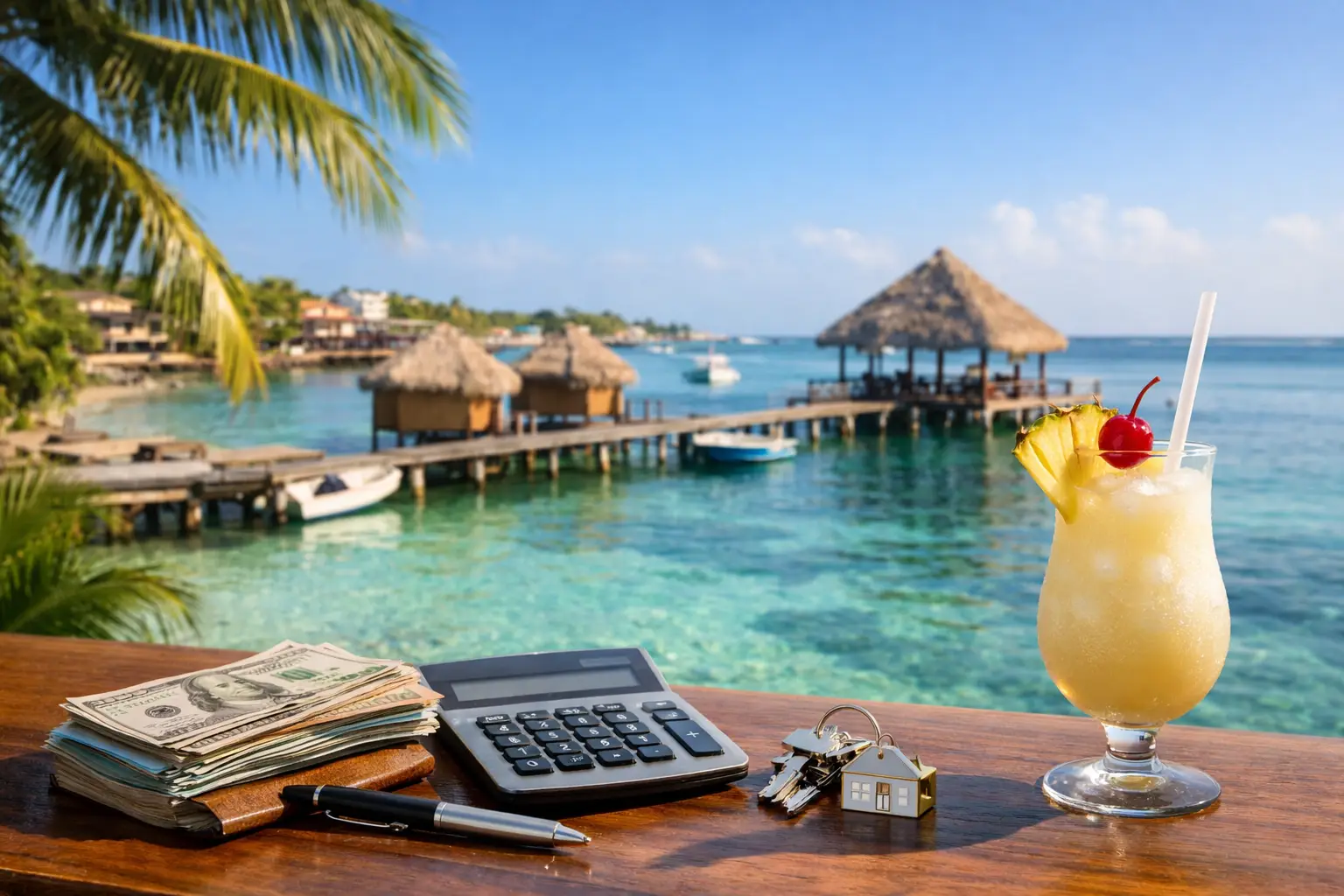
A sunset dinner on the beach can make San Pedro feel like an easy, low-cost escape from the United States. The reality is more specific. The San Pedro Belize cost of living can be attractive for buyers with a clear plan, but Ambergris Caye is Belize’s most in-demand island market. Imported goods, waterfront convenience, and short-term rental demand can push everyday costs well above what newcomers expect.
For retirees, remote workers, and second-home buyers, San Pedro can still deliver tremendous lifestyle value: warm weather, English-speaking residents, a walkable town center, Caribbean water, and direct access to a property market built around condos, homes, land, and income-producing vacation rentals. The key is separating the cost of enjoying San Pedro for a week from the cost of living there year-round.
What Does It Cost to Live in San Pedro, Belize?
Short answer: A single person renting modestly and cooking at home can live in San Pedro on roughly US$2,000 to US$3,000 a month. A couple wanting a furnished condo, regular dining out, air conditioning and private healthcare should budget about US$3,500 to US$5,500 or more. Beachfront addresses and imported goods push costs higher.
A single person who rents modestly, cooks at home often, and uses a golf cart selectively may live comfortably on roughly $2,000 to $3,000 per month. A couple seeking a well-located furnished condo, regular restaurant meals, air conditioning, private healthcare, and an active social life may budget $3,500 to $5,500 or more monthly.
Those figures are planning ranges, not fixed rates. A beachfront address, a newly built condo, daily use of air conditioning, frequent mainland trips, and an import-heavy lifestyle all move the number upward. On the other hand, residents who choose a neighborhood south or north of town, shop locally, and live without the expectation of U.S.-style convenience at every turn can spend considerably less.
Belize uses the Belize dollar, which is pegged at BZ$2 to US$1. Many real estate transactions, rental listings, and tourism-related prices are quoted in U.S. dollars, so buyers should always confirm which currency is being used before comparing costs.
Housing Is the Biggest Variable
Housing is the clearest dividing line in the San Pedro budget. Rental rates vary sharply based on location, season, furnishings, views, security, backup power, pool access, and whether the property is designed for the vacation-rental market.
A basic long-term one-bedroom apartment away from the beachfront may start around $800 to $1,200 per month, while a modern furnished condo in a desirable area can easily run $1,500 to $2,500 or more. Two-bedroom beachfront or resort-style units frequently command higher rates, particularly when they are turnkey, professionally managed, and available for short-term stays.
For many relocation-minded buyers, ownership changes the calculation. A condo can provide a personal island base while creating rental income during unused weeks. That does not mean every unit is automatically profitable. Buyers should account for homeowners association fees, property taxes, insurance, management fees, cleaning, maintenance, furnishings, marketing, and periods without bookings.
A lower purchase price alone is not the best value. A well-positioned property with reliable management, strong guest appeal, and practical year-round access may have more investment potential than a cheaper unit that is difficult to rent or maintain. Narrow your search with San Pedro listings, then visit your top picks in person before you make an offer.
Ownership expenses to price before you buy
Property taxes in Belize are generally low by U.S. standards, but ownership has other recurring costs. Condo association dues may cover items such as building maintenance, pool care, security, insurance for common areas, and reserve contributions. Ask what is included, how often fees have increased, whether special assessments have occurred, and whether the building has adequate reserves.
Insurance deserves close attention on an island. Wind, water, and contents coverage can differ materially by property and insurer. If rental income is part of the plan, also confirm the property’s rental rules, management options, occupancy history, and any licensing or operating requirements that apply.
Food, Dining, and Everyday Shopping
San Pedro has excellent restaurants for its size, from Belizean staples and fresh seafood to international dining. It also has the prices that come with a tourism-driven island economy. A casual local meal may cost $8 to $15 per person, while a sit-down dinner with drinks can quickly reach $25 to $50 per person or more.
Groceries reward flexibility. Locally grown produce, eggs, rice, beans, chicken, and seafood can be reasonably priced, especially when purchased in season and from local vendors. Imported wine, specialty health foods, premium cuts of meat, recognizable U.S. brands, and many household products cost more because they have to reach an island.
A couple that cooks most meals at home might budget $600 to $900 per month for groceries, depending on preferences. Add regular restaurant meals, delivery, imported snacks, and cocktails, and food spending can climb past $1,200 monthly without much effort.
The practical adjustment is not giving up the island lifestyle. It is building a routine around local markets, familiarizing yourself with seasonal availability, and treating imported convenience items as a choice rather than a default.
Utilities, Internet, and Island Services
Electricity is one of the expenses newcomers should not underestimate. Air conditioning is the main reason. A compact home with careful use may have manageable monthly bills, but a larger condo running multiple air-conditioning units throughout the day can cost several hundred dollars per month.
Budget roughly $150 to $400 monthly for electricity, with higher bills possible in larger or less efficient homes. Water, cooking gas, mobile service, and internet add to the total. Internet availability has improved significantly, but service quality and backup options can vary by neighborhood and building. Remote workers should test the actual connection at a specific property and ask about outage history, backup power, and generator access before committing.
Many newer developments offer conveniences that reduce lifestyle friction, including backup generators, water storage, security, elevators, pools, and on-site management. Those features may increase association fees, yet they can also make full-time island living more predictable.
Transportation: Golf Carts Change the Budget
San Pedro is not a car-dependent U.S. suburb. In town, walking, bicycles, taxis, and golf carts handle most daily transportation. Golf carts are the island standard, but buying, renting, insuring, charging, repairing, and parking one is a real budget line.
A resident who lives close to town may spend very little on transportation. Someone based farther north or south may find a golf cart essential, particularly during rain or when carrying groceries. Fuel, maintenance, and parts can cost more than expected on an island, so inspect any used cart carefully and ask about battery condition if considering an electric model.
Travel beyond the island also matters. Flights or water taxis to Belize City, plus onward travel to the mainland, can make routine appointments and international connections more expensive than they would be in a mainland location.
Healthcare, Insurance, and the Expenses People Miss
San Pedro has clinics, pharmacies, and medical professionals for routine needs, but complex care may require travel to Belize City or abroad. Many expatriates maintain private health insurance, self-insure for routine care, or use a combination of local services and international coverage.
The overlooked costs are often administrative and logistical: immigration renewals, legal fees during a purchase, banking arrangements, shipping, appliance replacement, hurricane preparation, and flights back to the United States. None of these should deter a move, but they belong in a realistic annual budget.
Retirees should also consider how often they expect to travel. A person who visits family in the U.S. four times a year has a different cost of living than someone who treats San Pedro as a seasonal home.
How Buyers Can Make San Pedro Work Financially
The strongest financial approach begins with the lifestyle you actually want. Decide whether your priority is beachfront mornings, a quiet residential setting, rental income, walkability, or a lower monthly burn rate. Trying to get every premium feature at the lowest price usually leads to disappointment.
Before purchasing, compare at least three scenarios: renting for a year, buying a primary-use home, and buying a rental-capable property with personal-use blocks. Include conservative assumptions for vacancy and maintenance. If the numbers still work without relying on peak-season income, you have a more durable plan.
San Pedro is not the cheapest place in Belize, and it should not be evaluated that way. It is a high-demand Caribbean lifestyle market where the right property can serve as a home, a retreat, and potentially an income-producing asset. Start with a budget that reflects the way you want to live, then let that budget guide the neighborhoods, property types, and ownership options worth pursuing.
Quick answers for buyers
How much is property tax in Belize?
Annual land tax in Belize is low by US standards. Outside towns and cities it is generally charged at about 1% of the land’s unimproved assessed value, while municipalities set their own property taxes. Ask the seller for the latest tax receipt so you can confirm the current amount and that nothing is owed before closing. Source: Ministry of Natural Resources.
Who qualifies for Belize’s QRP retirement program?
The Qualified Retirement Program is open to applicants aged 40 or older who receive at least US$2,000 a month (US$24,000 a year) in retirement income from outside Belize. Members must stay at least 30 consecutive days a year and are exempt from Belize tax on that foreign income, with duty-free import of household goods in the first year. Source: Belize Tourism Board.
Browse current listings: see all homes for sale in Belize.
Related reading: San Pedro listings, Ambergris Caye cost of living and West San Pedro property.
