
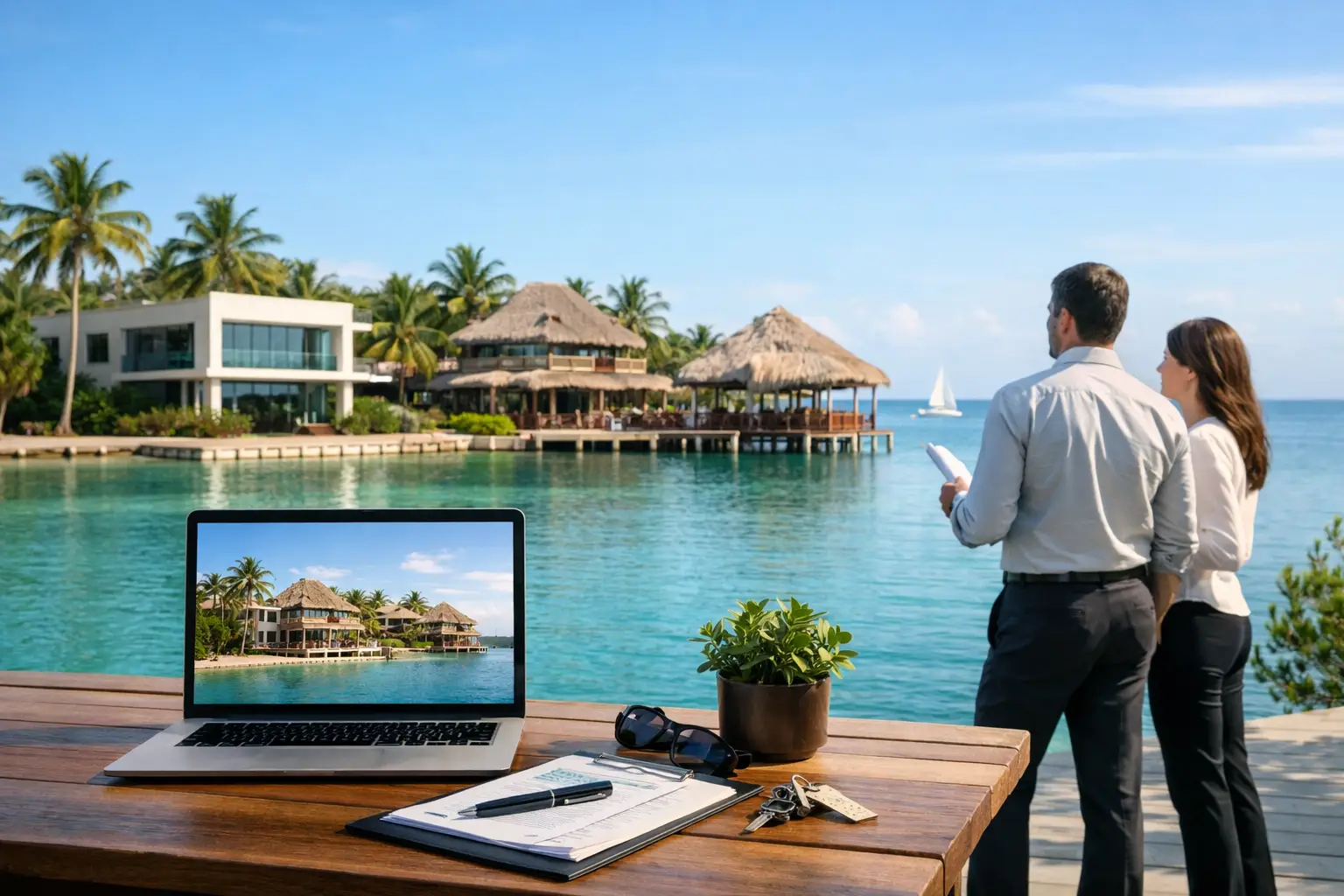
A beachfront restaurant with proven traffic, a small resort that can be repositioned, or a parcel near a growing village can each look like a very different deal. Yet all fall under the same search: Belize commercial property opportunities. The right choice comes down to matching the asset to the demand in its location, your operating capacity, and the income strategy you actually plan to pursue.
Belize attracts buyers who want more than a property deed. They are looking for a tourism-driven business, a place to build rental income, a foothold in a growing destination, or a lifestyle investment they can use personally. Commercial real estate can support all of those goals, but it requires a more focused evaluation than buying a vacation condo or a homesite.
Where Belize Commercial Property Opportunities Are Concentrated
Tourism remains a major driver of commercial activity, which makes the country’s coastal and island markets natural starting points. Ambergris Caye has the deepest concentration of visitor accommodations, restaurants, dive operations, retail services, and vacation rental demand. San Pedro is especially appealing for buyers seeking established businesses, boutique hotels, mixed-use buildings, and commercial sites near high-traffic areas.
Placencia offers a different profile. Its peninsula combines upscale tourism, beachfront development, and a more relaxed pace than San Pedro. Commercial buyers may find opportunities in boutique hospitality, food and beverage, wellness services, marina-adjacent concepts, and land positioned for future tourism-oriented development. The key trade-off is that demand can be more seasonal and inventory can be less extensive than in Belize’s largest island market.
Caye Caulker draws buyers looking for a smaller-scale island business environment. The village’s car-free character and steady flow of backpackers, divers, and independent travelers create demand for guesthouses, restaurants, retail spaces, and excursion-related businesses. It can be a strong fit for hands-on owners, but it may not suit investors seeking a large corporate-style operation or year-round luxury rates.
Inland Belize deserves equal attention. Belize City serves as the country’s primary commercial center, with demand tied to offices, warehouses, logistics, retail, and service businesses. Belmopan, the capital, offers government-related activity and a growing residential base. Areas near San Ignacio and the Cayo District can support eco-lodges, agricultural ventures, destination dining, and land-based development. These markets generally rely less on beachfront appeal and more on access, local need, and a specific business plan.
Start With the Asset, Not Just the View
A beautiful location can bring guests through the door, but it does not automatically make a property commercially viable. Before narrowing the search, decide whether you are buying an operating business, an income-producing building, development land, or a property that can serve more than one purpose.
An operating hotel, lodge, restaurant, or tour business may offer immediate revenue and an existing customer base. It also brings staffing, maintenance, licensing, inventory, and reputation management into the purchase. Buyers should look beyond gross revenue and ask how the operation performs after payroll, utilities, repairs, booking commissions, taxes, and owner involvement.
A mixed-use property can offer more flexibility. Ground-floor retail with apartments or guest suites above can spread income across different tenant or visitor types. A building with a restaurant space, rental units, and an owner’s residence may appeal to buyers relocating to Belize while keeping a business on-site. Flexibility has value, especially in smaller markets where demand can change with tourism patterns.
Commercial land is often the longer-term play. Waterfront, highway-frontage, marina-area, and village-edge parcels can be attractive where infrastructure and visitor demand are expanding. However, raw land usually has no cash flow on day one. Budget for site work, utilities, permits, design, construction, and the time required to reach stabilization.
Evaluate the Demand Behind the Deal
Commercial property values are tied to what the surrounding market can support. A retail unit needs foot traffic or a clear local customer base. A resort needs reliable demand, effective distribution, and a reason for travelers to choose it over nearby alternatives. A warehouse needs access to transport routes and tenants with a practical reason to occupy it.
For hospitality assets, ask who the guest is. Is the property aimed at divers, families, digital nomads, luxury travelers, long-stay visitors, or inland adventure seekers? The answer affects room design, pricing, marketing costs, staffing, food service, and amenities. A budget guesthouse and a luxury beach resort may both operate in Belize, but they are fundamentally different businesses.
For rental-oriented commercial properties, examine the current leases and the tenant mix. Verify rental rates, payment history, lease terms, renewal options, and who is responsible for repairs and utilities. If a space is vacant, do not assume it will lease quickly at the seller’s projected rate. Compare the property’s location, condition, access, parking, visibility, and size to what local tenants actually need.
Due Diligence That Protects the Purchase
The best Belize commercial property opportunities are supported by documentation, not just a compelling listing description. Commercial due diligence should confirm what is included in the sale, what revenue is documented, and what legal or operational obligations transfer with the asset.
Use qualified local legal and accounting guidance to review title, boundaries, corporate ownership where applicable, taxes, permits, licenses, contracts, and any existing financing or liens. If the property includes a business, request financial statements, occupancy or booking data, supplier agreements, employee information, equipment lists, and utility records. A seller’s reported income should be traceable to bank deposits, reservation systems, invoices, or other credible records.
Physical review matters just as much in a tropical market. Inspect roofs, drainage, seawalls, docks, foundations, septic systems, water storage, air conditioning, generators, and internet availability. On an island or remote coastal site, replacement parts, skilled labor, and construction materials may cost more and take longer to obtain. Those realities should be built into both your offer and your reserve budget.
Before making an offer, buyers should have clear answers to these core questions:
- Is the property legally usable for the intended commercial activity?
- What income is verified, and what income is only projected?
- Which licenses, leases, employees, equipment, and contracts are included?
- What capital repairs or upgrades will be needed in the first two years?
- How will the property be managed when you are outside Belize?
Financing, Currency, and Ownership Planning
Many US buyers acquire Belize commercial real estate with cash, private financing, seller financing, or equity from existing assets. Financing availability varies by property type, borrower profile, and whether the asset has documented income. Seller financing can widen the buyer pool and make a deal more accessible, but its terms should be carefully structured and reviewed by appropriate professionals.
Belize uses the Belize dollar, which is pegged to the US dollar at two Belize dollars to one US dollar. That fixed relationship can simplify planning for US-based buyers, although operating expenses, supplier costs, labor, insurance, and imported materials should still be reviewed in detail. A property earning primarily in US dollars may have a different risk profile from one serving mostly local customers.
Ownership is open to foreign buyers; even so, the structure of the purchase should fit the asset and the buyer’s broader tax, estate, and liability planning. An owner-operated restaurant, a hotel with employees, and a passive leased building each carry different exposure. Get advice early rather than trying to adjust the structure after closing.
Find the Opportunity That Matches Your Role
Some buyers want a turnkey income property with professional management and limited personal involvement. Others want to relocate, become part of the community, and operate a boutique lodge or restaurant themselves. Neither approach is automatically better. The right one depends on how much time you can commit, how comfortable you are with local operations, and whether your return target depends on active management.
Belize Real Estate MLS helps buyers compare commercial listings alongside resorts, businesses, land, waterfront properties, and investment inventory in the country’s most sought-after markets. Use location, price, property type, and lifestyle filters to reduce a wide market into a shortlist that fits your budget and strategy.
A commercial property should give you more than an appealing address. Look for an asset with a clear customer base, credible numbers, practical access, and a role you are ready to play. That is where a Belize investment starts to become a business with staying power.
Quick answers for buyers
Can foreigners own property in Belize?
Yes. Foreigners can buy and hold freehold property in Belize with the same ownership rights as Belizean citizens; the old Aliens Landholding Act was abolished in 2001. You do not need residency or a local partner, but you should have a Belize attorney search the title at the Lands Registry before any money changes hands. Source: Belize real estate attorneys Wrobel & Co..
How much is stamp duty when buying property in Belize?
Foreign buyers pay stamp duty of 8% on the value above the first US$10,000, charged on the higher of the purchase price or the government’s assessed value. The buyer normally pays it at transfer, along with attorney and registration costs, so add it to your budget before you make an offer. Source: Belize closing costs guide.
Related reading: property for sale in Belize, homes for sale in Belize and can foreigners buy property in Belize.
