
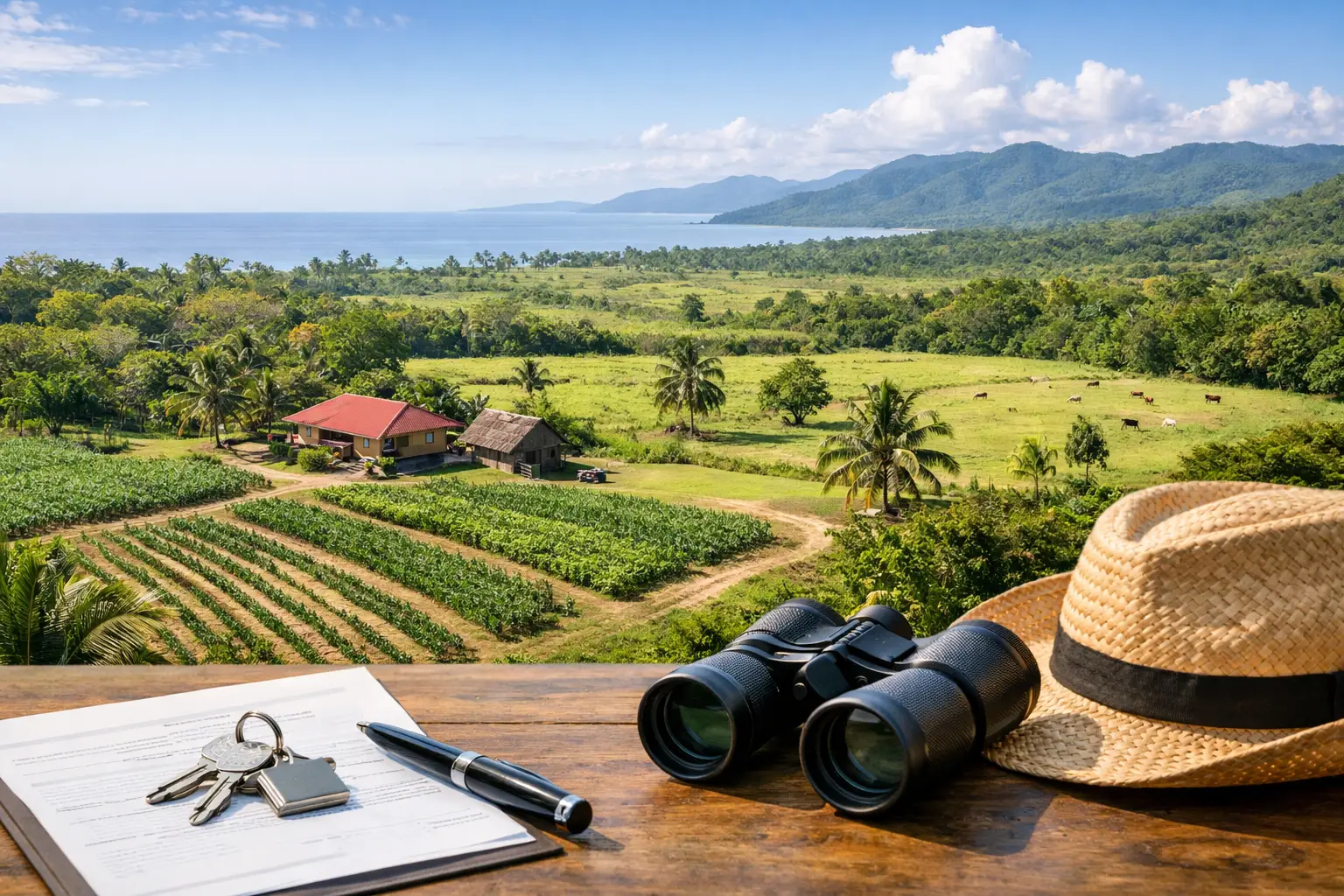
A farm in Belize can be far more than acreage. It can be a private home base, a producing orchard, a cattle operation, an eco-lodge setting, or a long-term land investment with room to grow. But Belize farms for sale are not interchangeable. A beautiful parcel with rich soil may have weak road access, while a lower-priced property may need serious work on water, drainage, fencing, or title verification before it can support your plans.
For US buyers, the opportunity is real: Belize offers English-speaking transactions, a familiar common-law framework, and a wide range of rural settings within reach of Caribbean beaches, towns, and airports. The smart purchase begins by matching the land to the business, lifestyle, or income goal you actually have.
Start With the Farm You Want to Own
Before comparing acreage and asking price, define what “farm” means for your purchase. Some buyers want an established operation with mature citrus, cacao, coconuts, livestock infrastructure, staff housing, equipment, and immediate cash flow. Others are looking for raw or lightly improved land where they can build a home, plant a small orchard, raise animals, or hold land for the future.
Those are very different searches. A turnkey agricultural property can shorten the path to production, but it may carry a higher price and require careful review of operating records, labor needs, crop health, equipment condition, and existing contracts. Vacant farmland can offer more flexibility and a lower entry point, but roads, wells, power, clearing, and buildings can quickly change the total cost.
Your intended scale matters just as much. A hobby farm near a village has different needs than a commercial cattle ranch or an export-oriented fruit operation. Be clear about whether you want lifestyle acreage, operating income, future development potential, or a combination of all three. The best Belize farm purchase is usually the one with the fewest compromises against its intended use.
Where to Find Belize Farms for Sale
Belize has distinct agricultural regions, and location affects everything from soil and rainfall to resale demand and access to services. Inland areas often offer the strongest selection of larger parcels, while coastal districts may appeal to buyers seeking a farm-plus-lifestyle property near tourism markets.
Cayo District
Cayo is a leading choice for buyers who want productive land, jungle scenery, river frontage, and access to the amenities of San Ignacio and Santa Elena. The district supports a mix of cattle, fruit, vegetables, cacao, small-scale organic farming, and eco-tourism concepts. It also attracts relocation-minded buyers who want a rural home without being completely remote.
Not every part of Cayo has the same topography or infrastructure. Some parcels are gently rolling and ready for a residence or pasture, while others are steep, heavily forested, or affected by seasonal water movement. A site visit is essential, particularly if the listing highlights river access, creeks, jungle, or off-grid potential.
Toledo District
Toledo is known for its lush landscape, cacao production, rainforest environment, and larger agricultural parcels. It can be an excellent market for buyers looking for privacy, long-term land value, or a working farm with a more remote feel. The trade-off is that distances, road conditions, access to suppliers, and access to major tourism centers can be more challenging than in northern or central Belize.
For the right buyer, that trade-off is the appeal. A well-located Toledo property may suit cacao, tropical fruit, sustainable agriculture, or an eco-retreat project, especially when it has dependable water and practical access to Punta Gorda or a main road.
Stann Creek and the Hummingbird Highway Area
Stann Creek combines fertile valleys, mountain views, citrus country, and proximity to Placencia, Dangriga, and the southern coast. This can be a strong option for buyers who want agricultural potential without giving up access to beach destinations, resorts, and tourism demand. Farms in this area may be especially attractive for a residence combined with fruit production, specialty crops, or a hospitality concept.
Orange Walk and Corozal Districts
Northern Belize is home to broad, flatter agricultural areas, including land used for sugar cane, cattle, vegetables, and mixed farming. Buyers seeking larger acreage, easier terrain, and proximity to Mexico may find compelling opportunities here. Conditions still vary parcel by parcel, especially around drainage, seasonal flooding, and utility availability.
Look Beyond Acreage and Price
A listing price is only the opening number. Productive agricultural land depends on the practical details that are easy to miss when viewing photographs or aerial maps.
Water should be among the first questions. Ask whether the property has a river, creek, spring, pond, well, rainwater catchment, or legal and dependable access to a water source. A river view is not automatically an irrigation plan, and a seasonal creek is not the same as year-round water. Confirm what is present, when it is available, and whether water quality has been evaluated for the use you intend.
Road access deserves the same level of attention. Determine whether access is from a paved road, an all-weather gravel road, a seasonal track, or a private easement across another property. Visit after rain if possible. A farm that is easy to reach during the dry season may be difficult to operate when roads are wet.
Soils, drainage, elevation, and existing vegetation also shape the land’s earning potential. Mature citrus or coconut trees can be valuable assets, but only if they are healthy and suited to the market. Cleared pasture may save time, while dense jungle may create privacy and timber potential but require more capital to convert. A qualified local agricultural professional can help assess whether the land supports your planned crop or livestock operation.
Utilities are another cost driver. Confirm the distance to electricity, mobile service, internet options, and any existing connections. Solar can be a practical solution in rural Belize, but an off-grid setup should be budgeted as part of the purchase rather than treated as an afterthought.
Due Diligence Protects the Opportunity
Ownership is open to foreign buyers; even so, every farm purchase should move forward with independent legal guidance and a full review of the property documents. The goal is not simply to confirm that a seller has paperwork. You need to understand exactly what is being sold, what rights come with it, and what restrictions or obligations may affect the property.
Ask your attorney to review the title, survey plan, boundaries, registered access, liens, encumbrances, and any leases or agreements tied to the land. If the farm includes a house, caretaker quarters, machinery, livestock, crops, or an operating business, clarify what is included in the sale and document it carefully.
Agricultural operations may also involve permits, environmental considerations, water use issues, labor arrangements, or export requirements. These details depend on the type and scale of the operation. A small family orchard and a commercial farm should not be evaluated with the same checklist.
Buyers should also verify property taxes, annual carrying costs, insurance availability, and the costs of maintaining roads, fencing, equipment, and buildings. A lower purchase price can be a genuine value, but only when the improvement budget is realistic.
Evaluate Income Potential With Clear Eyes
Income-producing Belize farms can be compelling because they combine tangible land ownership with a possible operating return. Still, advertised income should be tested, not assumed. Request production records, sales history, expense information, labor costs, crop cycles, and proof of any rental or hospitality revenue.
Agriculture brings weather risk, disease risk, commodity-price shifts, and management demands. A farm with established crops may produce revenue from day one, yet it can also require experienced workers, replacement planting, irrigation upgrades, and dependable routes to market. If you do not plan to manage the operation personally, identify who will do it and what that management will cost.
Diversification can strengthen the plan. A property with a residence, fruit trees, pasture, guest cabanas, and a strong location near a tourism corridor may have multiple paths to value. That does not mean every farm should become a resort. It means buyers should recognize when location and infrastructure support more than one long-term use.
Build a Search Around Your Non-Negotiables
A focused property search saves time and reduces expensive surprises. Start with acreage range, budget, region, road access, water, utilities, and intended use. Then decide which features are preferences rather than requirements, such as river frontage, a move-in-ready home, mature crops, mountain views, or proximity to Placencia, San Ignacio, or the coast.
Belize Real Estate MLS brings farm listings together with land, homes, commercial assets, and investment properties, making it easier to compare rural opportunities against your broader Belize plans. A buyer considering a farm should also look at nearby towns, tourism routes, airport access, and future resale demand. The property may be rural, but its connection to the rest of Belize still matters.
The right farm is not always the largest parcel or the one with the most dramatic view. It is the property where water, access, land condition, legal clarity, and your financial plan all point in the same direction. When those pieces line up, a farm in Belize can become a productive asset and a place you will want to return to for years.
Quick answers for buyers
Can foreigners own property in Belize?
Yes. Foreigners can buy and hold freehold property in Belize with the same ownership rights as Belizean citizens; the old Aliens Landholding Act was abolished in 2001. You do not need residency or a local partner, but you should have a Belize attorney search the title at the Lands Registry before any money changes hands. Source: Belize real estate attorneys Wrobel & Co..
How much is property tax in Belize?
Annual land tax in Belize is low by US standards. Outside towns and cities it is generally charged at about 1% of the land’s unimproved assessed value, while municipalities set their own property taxes. Ask the seller for the latest tax receipt so you can confirm the current amount and that nothing is owed before closing. Source: Ministry of Natural Resources.
Browse current listings: see all land for sale in Belize.
Related reading: property for sale in Belize, homes for sale in Belize and can foreigners buy property in Belize.
