



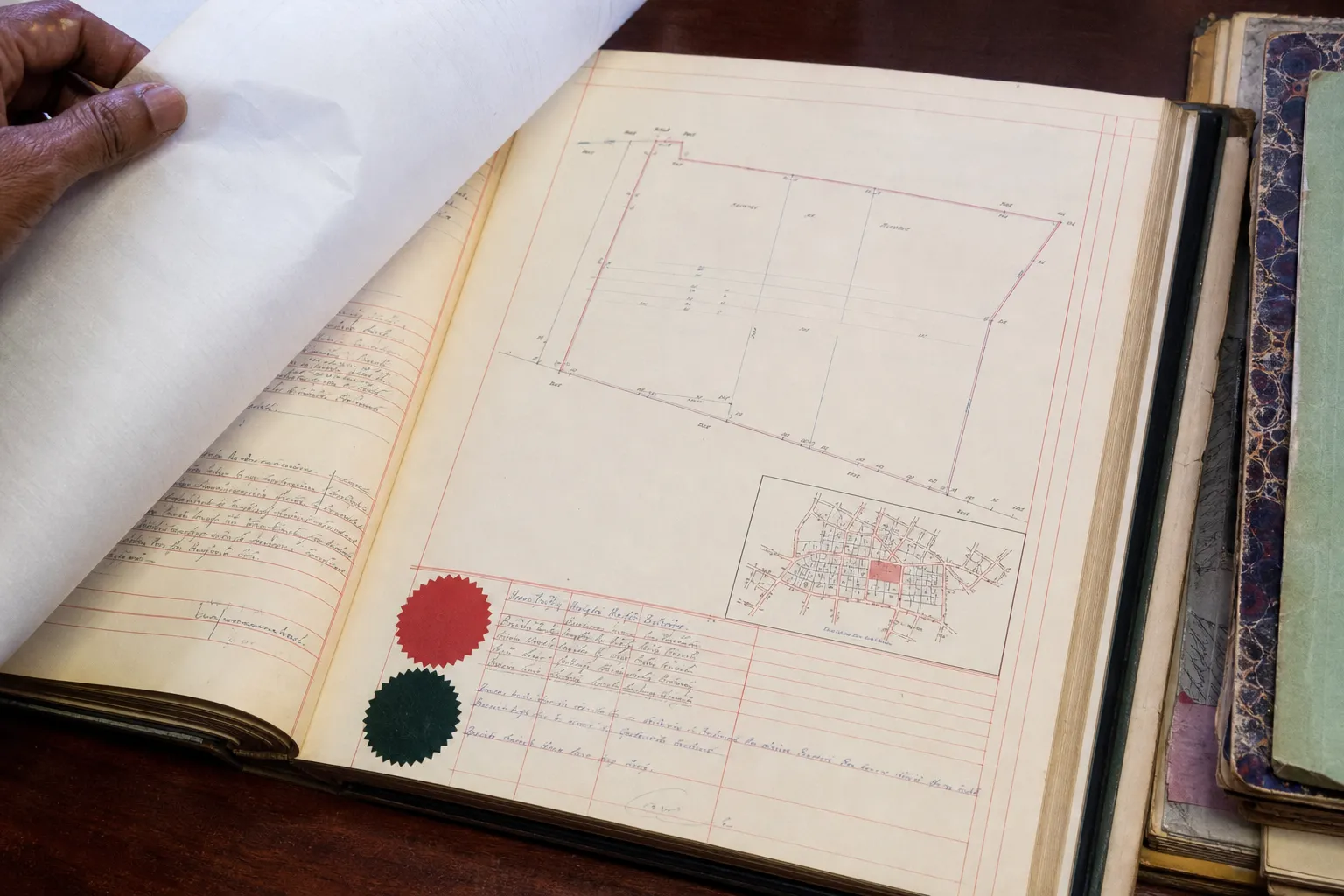
Short answer: Belize uses two title systems. In declared compulsory registration areas, ownership is recorded under the Registered Land Act and evidenced by a Land Certificate. Elsewhere, land passes by deed of conveyance under the General Registry Act. Either way, have a Belize attorney search the title at the Land Registry in Belmopan before you pay.
What are the two types of property title in Belize?
Short answer: Belize has declared land, inside compulsory registration areas, where titles are registered under the Registered Land Act and a Land Certificate is issued, and undeclared land, where ownership is proven by a chain of recorded deeds of conveyance under the General Registry Act. Condo units in registration zones can carry strata titles.
According to the Ministry of Natural Resources Land Registry, the Land Registry operates under three laws: the Registered Land Act (Chapter 194), the Strata Titles Registration Act (Chapter 196) and the General Registry Act (Chapter 327). The ministry describes two categories of land, declared and undeclared, and notes that all transfers of both kinds must be recorded or registered at the Land Registry in Belmopan, Cayo District.
The difference matters because the two systems prove ownership in different ways. Under the registered system, the government keeps a register for each parcel, and the register itself is the record of who owns the land and what charges affect it. Under the deed system, ownership is shown by a chain of documents, each recording a transfer from one owner to the next, back to a good root of title. Older parts of Belize, rural parcels and many village lots still sit under the deed system, while many towns, coastal areas and subdivisions have been declared compulsory registration areas.
| Item | Registered (declared) land | Unregistered (undeclared) land |
|---|---|---|
| Governing law | Registered Land Act, Cap. 194 | General Registry Act, Cap. 327 |
| Proof of ownership | Land register entry; Land Certificate | Chain of recorded deeds of conveyance |
| Where recorded | Land Registry, Belmopan | Land Registry, Belmopan |
| Typical description | Registration section, block and parcel number | Deed schedule with plan and lot numbers |
| Deadline to lodge transfer | — | 1 month after signing (3 months if signed abroad) |
| Stamp duty (foreign buyer) | 8% of value above US$10,000 | 8% of value above US$10,000 |
| Typical closing time | 30–90 days | 30–90 days |
What is a Land Certificate in Belize?
Short answer: A Land Certificate is the document the Registrar of Lands issues to the registered owner of a parcel inside a compulsory registration area. It shows the subsisting entries in the land register for that parcel, including the owner and any charges or restrictions. The register itself, not the paper certificate, is the official record.
The Registered Land Act, Cap. 194 applies to any area the minister declares a compulsory registration area. From that date, all dealings with land in the area must follow the Act, and a dealing made any other way has no validity. Section 34 lets a registered proprietor ask the Registrar for a land certificate (or a certificate of lease, for a registered lease) showing every subsisting entry on the register.
When an area is declared, parcels already recorded under the General Registry Act are moved onto the new land register, and owners are notified. An owner of land that was never recorded must apply for first registration before selling or mortgaging it. For a buyer, this means a parcel described by block and parcel number in a registration section usually has a Land Certificate, while a parcel described only by a deed and plan may be under the older system.
What is a deed of conveyance?
Short answer: A deed of conveyance is the document that transfers ownership of land that is not in a compulsory registration area. It is recorded at the Land Registry under the General Registry Act. Because ownership depends on the whole chain of earlier deeds, your attorney must trace that chain back to a sound root of title.
The Land Registry’s Land Registry deed-lodging requirements show what a conveyance must contain before it will be accepted: the original deed prepared in duplicate, a clear schedule with the entry or plan number, block or lot number and land size, a clear recital of the origin (root) of title, proper execution before a Justice of the Peace or notary, certified ID copies, the signature of the attorney or officer who prepared it, and a zero-balance tax statement. Deeds must be lodged within one month of signing in Belize, or three months if signed abroad, or they will not be accepted.
Clear deeds of conveyance and Land Certificates are both secure forms of ownership once a proper title search has been done, according to Belize real estate attorneys Wrobel & Co..
How does a title search work in Belize?
Short answer: Your Belize attorney searches the parcel’s records at the Land Registry, and at the Companies Registry if a company owns the property, to confirm the seller owns it and to find mortgages, liens, judgments, leases or restrictions. The attorney then gives a written title opinion. Do not release purchase funds before you have it.
Belize real estate attorneys Wrobel & Co. describe the title search as the step that protects buyers from fraudulent title, and say the only way to be sure a property has clear title is to have a Belize attorney research it and issue a title opinion. A thorough search usually covers:
- the current registered owner, compared with the seller’s ID and any company documents;
- the plan, block and parcel numbers, compared with a current survey and the boundaries on the ground;
- charges (mortgages), cautions, restrictions, leases and easements on the register or in recorded deeds;
- for deed land, each conveyance in the chain back to a sound root of title;
- whether land tax or town property tax is paid up, since a zero-balance tax statement is needed to register a transfer.
Most Belize purchases close in about 30 to 90 days, and much of that time is the title search and registration. For the wider process, see how to check a property title before buying and the closing process for US buyers.
Do you need title insurance in Belize?
Short answer: Title insurance is optional. Wrobel & Co. says it is available from reputable US title insurers but is not necessary if a qualified Belize attorney searches the title. Some buyers and lenders still choose it for extra protection. Compare the premium with the price and decide alongside your attorney, not instead of hiring one.
Title insurance does not replace due diligence. A policy is a promise to pay if a covered title defect appears later; it does not stop a bad purchase from happening. If you buy a policy, read the exclusions carefully, especially for boundary disputes, unrecorded interests and anything that a survey would have revealed.
What title red flags should buyers watch for?
Short answer: Walk away or pause if the seller’s name does not match the register, there is no current survey, the plan or parcel numbers do not match the land shown, taxes are unpaid, a company seller cannot prove who controls it, or anyone asks you to skip an attorney or send money outside escrow.
Other warning signs include:
- Pressure to close fast or to pay a deposit before a title opinion. Belize has no independent escrow companies; deposits are usually held by an attorney, bank or broker, so know who holds your money (Belize real estate attorneys Wrobel & Co.).
- Restrictive covenants that do not appear on the register. In a 2017 Supreme Court of Belize claim, developers of a Placencia subdivision argued that covenants in a recorded deed of incumbrance were left off the new land register when the area was declared. Ask your attorney to check the older deed records too.
- Condo units sold by share certificate. True strata condo titles exist only in the registration zones where the strata law applies, such as Belize City, San Pedro, Placencia and Seine Bight; elsewhere units are often held through company shares (Belize real estate attorneys Wrobel & Co.).
- National land. Land still held from the government on a lease or purchase agreement is not freehold until title is issued.
- People living on the land. Wrobel & Co. notes that adverse possession claims require at least 30 years of uninterrupted possession on national and conveyed land, or 12 years on registered land, so long-term occupants deserve a closer look.
Can foreigners hold title in their own name?
Short answer: Yes. Foreigners have the same property ownership rights as Belizean citizens and can hold a Land Certificate or deed in their own name, jointly or through a company. The old Aliens Landholding Act, which once required a licence, was abolished in 2001, so no local partner or residency is needed.
Holding through a Belize company can suit some buyers, but it adds a second set of records to search. See can foreigners buy property in Belize for ownership structures.
What it costs to transfer title
The main government charge on a transfer is stamp duty. Foreign buyers pay 8% on the value above the first US$10,000, charged on the higher of the purchase price or the assessed value, under the Stamp Duties (Amendment) Act; Belizean citizens pay a lower rate. Attorney fees and registration costs come on top. See Belize closing costs buyers pay for a full breakdown.
Next steps
Browse land for sale in Belize or homes for sale in Belize, and ask the listing agent early whether a parcel has a Land Certificate or a deed. Then hire your own Belize attorney before you sign anything binding. All amounts in this guide are in US dollars; the Belize dollar is fixed at BZ$2 to US$1 (Central Bank of Belize).
:%20Land%20Certificates,%20Deeds%20and%20Title%20Searches)