
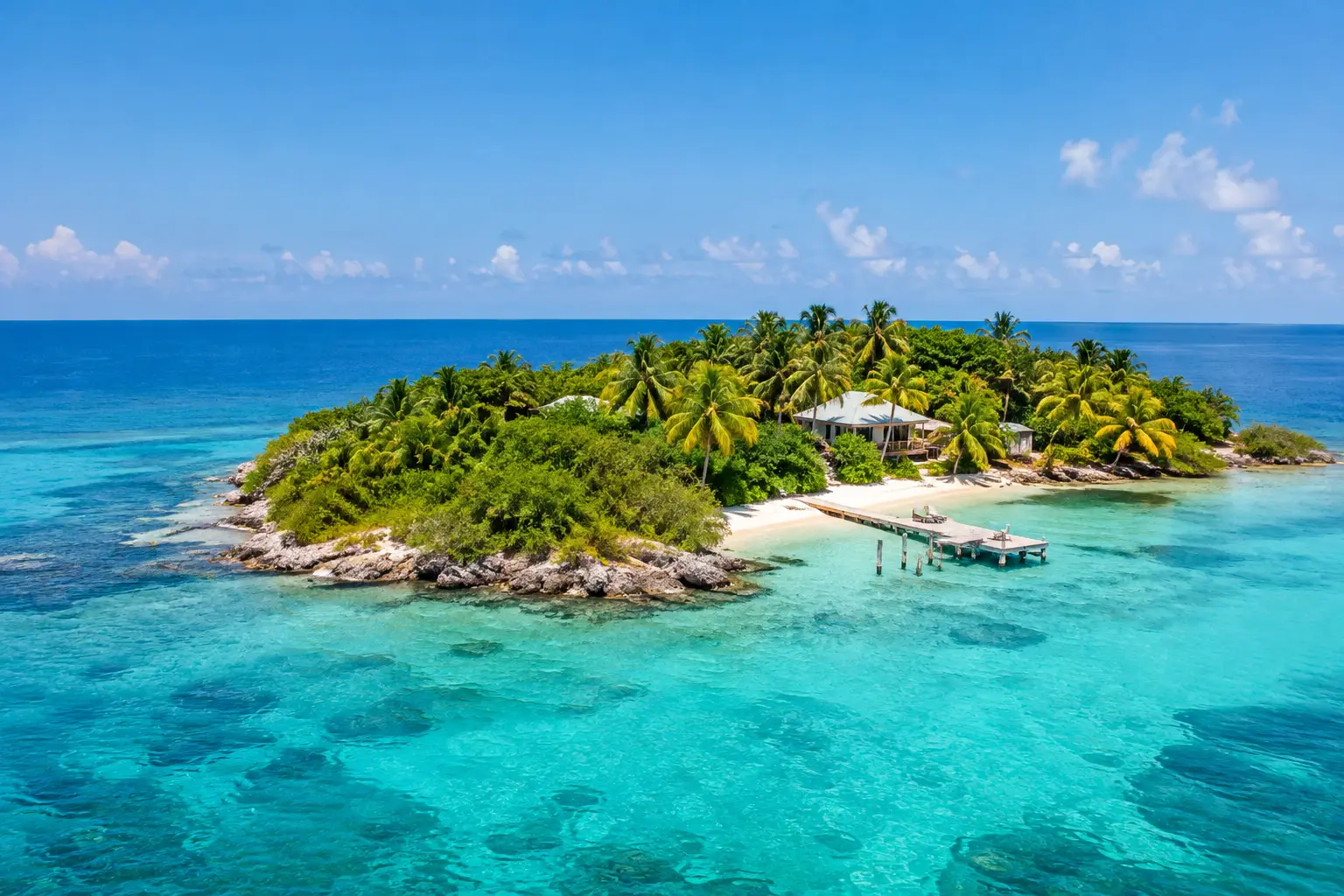
A private island does not have to begin with a seven-figure resort plan. Some of the cheapest private islands for sale in Belize are undeveloped cayes, mangrove islands, and small parcels that trade at a fraction of the cost of established beachfront property. The opportunity is real, but the low asking price is only the opening number. Access, elevation, utilities, title, and development rules will determine whether an island is a smart purchase or an expensive project.
For buyers looking beyond a traditional vacation home, Belize offers a rare combination: English is the official language, the country uses a common-law legal framework, and foreign buyers can generally acquire property with the same ownership rights as Belizean citizens. The right island can support a personal retreat, a boutique hospitality concept, a long-term land hold, or a carefully planned rental property. The key is matching the island to the purpose and the true cost of ownership.
What Makes a Private Island Affordable?
Short answer: Affordable islands usually come with trade-offs: low-lying or mangrove land, boat-only access, distance from services, no utilities, or limited building potential. A small caye near a tourism hub can cost more than a larger remote island, so compare the total investment, including docks, power and water, not just the asking price.
The lowest-priced island is rarely the one with the lowest total investment. In Belize, asking prices are shaped by more than acreage. A small caye near a populated tourism center may cost more than a larger island farther offshore because it has better boat access, stronger rental demand, existing improvements, and a more straightforward path to utilities.
Affordable private islands usually have one or more limitations: they may be low-lying, heavily vegetated, reachable only by boat, outside established service areas, or sold without a dock, dwelling, freshwater system, or power source. None of those factors automatically disqualifies a property. They simply need to be priced into the buyer’s plan.
An island with a usable dock, elevated building area, clear title, and reliable access can be a better value than a cheaper parcel that requires years of permits, fill, infrastructure work, and logistical planning. Buyers should think in terms of acquisition cost plus readiness cost, not price per acre alone.
Where to Find the Cheapest Private Islands for Sale
Belize has hundreds of cayes and offshore parcels, but the location changes the economics dramatically. Buyers seeking entry-level island opportunities should focus on areas where land remains less developed while access to services is still practical.
Southern Belize and the Placencia Area
Southern Belize can offer a compelling balance of privacy and accessibility. Islands and cayes near Placencia, Seine Bight, and the broader southern coast may appeal to buyers who want proximity to an established village, mainland provisions, domestic flights, restaurants, and tourism infrastructure without the premium attached to the busiest northern markets.
This region suits buyers considering eco-lodging, a private compound, or a future hospitality project. It also requires careful due diligence on marine conditions, access routes, protected areas, and the practical cost of moving construction materials by barge or boat.
Near Caye Caulker and Northern Cayes
Caye Caulker has a relaxed, low-rise appeal and sits within reach of Belize City and Ambergris Caye. Private island inventory near this corridor can be highly desirable, particularly when a property is close enough for regular boat service but far enough away to deliver genuine privacy.
Smaller undeveloped cayes may present lower entry prices than established properties on Ambergris Caye. However, buyers should expect demand to rise quickly for islands with good water depth, protected anchorage, stable shoreline, and easy travel times from the main settlement.
Remote Atolls and Outer Cayes
Remote islands can look exceptionally affordable on a listing sheet. They may also require the highest level of self-sufficiency. Outer cayes and atoll properties can be exceptional for conservation-minded owners, fishing retreats, off-grid escapes, or destination resorts with a substantial development budget.
The trade-off is logistics. Fuel, water, staff, equipment, emergency access, waste management, and storm preparation all become more complex as distance from the mainland increases. A remote island can be the right choice, but it is not typically the right first project for a buyer who wants immediate rental income.
The Price Is Only Part of the Island Budget
Before making an offer, buyers should build a budget that treats an island as a working property rather than an empty piece of land. Costs vary widely, yet several categories deserve attention from the start.
Transportation is often the first surprise. Determine whether the property can be reached by small boat in ordinary weather, whether deeper-draft access is available, and whether there is a legal, usable location for a dock. If guests, contractors, or supplies cannot arrive efficiently, every future expense rises.
Utilities are next. Some islands can connect to mainland or nearby grid services, while others require solar power, battery storage, backup generation, rainwater catchment, desalination, septic systems, and satellite communications. Off-grid systems can support comfortable living, but they need professional design, maintenance, replacement planning, and a realistic capital budget.
Then consider the shoreline and buildable land. Buyers should assess elevation, erosion, mangrove coverage, coral and seagrass considerations, hurricane exposure, and the amount of land that can realistically support improvements. An island may have impressive acreage but limited usable ground.
Finally, include ownership and operating expenses. Legal review, survey work, insurance, security, caretaking, boat ownership, fuel, property management, and periodic maintenance all belong in the decision. If the property is intended for rentals or a resort, add marketing, staffing, licensing, guest transport, and reserve funds for weather-related repairs.
Due Diligence That Protects an Island Buyer
Island purchases deserve a deeper review than an ordinary residential lot. A local real estate attorney should verify title, boundaries, registered rights of way, leasehold versus freehold status, existing liens, and any restrictions attached to the parcel. The property should be surveyed, especially where shorelines or neighboring cayes create uncertainty about boundaries.
Buyers should also confirm the island’s development potential before assuming they can build a home, marina, dock, resort, or rental cabins. Coastal development can involve environmental review, permits, planning requirements, and restrictions designed to protect mangroves, reef systems, marine habitat, and public waterways. The permitted use should match the buyer’s actual plan.
A physical inspection matters just as much as paperwork. Visit at different tide conditions if possible. Check boat travel time from the nearest launch point, cellular coverage, water depth, wave exposure, anchorage, nearby activity, and the condition of any existing structures. An aerial image can make every island look ready for a beach house. A site visit reveals whether the beach is stable, the land is dry, and the access works in real life.
Choosing an Island for Lifestyle, Income, or Land Banking
The best value depends on what ownership is meant to accomplish. A buyer seeking a private family escape may prioritize short boat transfers, a protected swimming area, and room for a main house plus guest cottages. An investor focused on rental income may accept a higher acquisition price for established access, proximity to visitor markets, and a faster route to operations.
For land banking, a less improved island can make sense when the buyer is patient, understands the holding costs, and believes the surrounding market will mature. In that case, title quality, location, and environmental constraints may matter more than current infrastructure. A low-cost island with no viable building path is not a land-bank opportunity. It is simply a limited-use asset.
For a hospitality project, it pays to begin with the guest experience. How will visitors arrive? Where will staff live? Can water and power systems handle occupancy? Is the location compelling enough to justify boat transfers? The answers can quickly separate a viable boutique resort concept from a beautiful but impractical idea.
How to Search Belize Island Listings More Effectively
Start with a clear price range, then separate islands into two categories: ready or nearly ready properties, and raw land requiring major infrastructure. Comparing those groups together can create false bargains. Also define the maximum travel time you will accept from Belize City, San Pedro, Caye Caulker, Placencia, or your preferred mainland base.
Use listing details to identify acreage, waterfront exposure, improvements, access, and proximity to population centers, but ask direct questions about title, utilities, dock rights, permits, and seasonal conditions. Belize Real Estate MLS helps buyers compare island opportunities alongside beachfront land, homes, resorts, and investment property across the country, making it easier to decide whether an island is truly the best fit for the budget.
The right private island is not necessarily the cheapest one on the market. It is the one whose location, legal status, access, and improvement requirements align with the life or investment you want to build in Belize. Buy the island you can realistically reach, insure, maintain, and enjoy, then let its privacy become an asset rather than a complication.
Quick answers for buyers
Can foreigners own property in Belize?
Yes. Foreigners can buy and hold freehold property in Belize with the same ownership rights as Belizean citizens; the old Aliens Landholding Act was abolished in 2001. You do not need residency or a local partner, but you should have a Belize attorney search the title at the Lands Registry before any money changes hands. Source: Belize real estate attorneys Wrobel & Co..
How much is stamp duty when buying property in Belize?
Foreign buyers pay stamp duty of 8% on the value above the first US$10,000, charged on the higher of the purchase price or the government’s assessed value. The buyer normally pays it at transfer, along with attorney and registration costs, so add it to your budget before you make an offer. Source: Belize closing costs guide.
Browse current listings: see all Belize islands for sale.
Related reading: Belize island listings, private islands with homes and Caribbean islands under $500K.
About the Author – Grant Kenneth
I rode out of Southern California in 2011 with a trade already learned. Businesses. Real estate. Mortgages. San Pedro wasn’t a shortcut. It was a different country. I put up websites, followed the search trails, and two years in, I met the woman I married in 2014. We had a boy the next year. She already had a five-year-old girl. The local property trade was fenced into about fifty camps, and nobody was opening the gates. So I built one yard for the listings. A partner ran the selling. When he hung up his hat, I kept the yard and walked the lots myself.
