
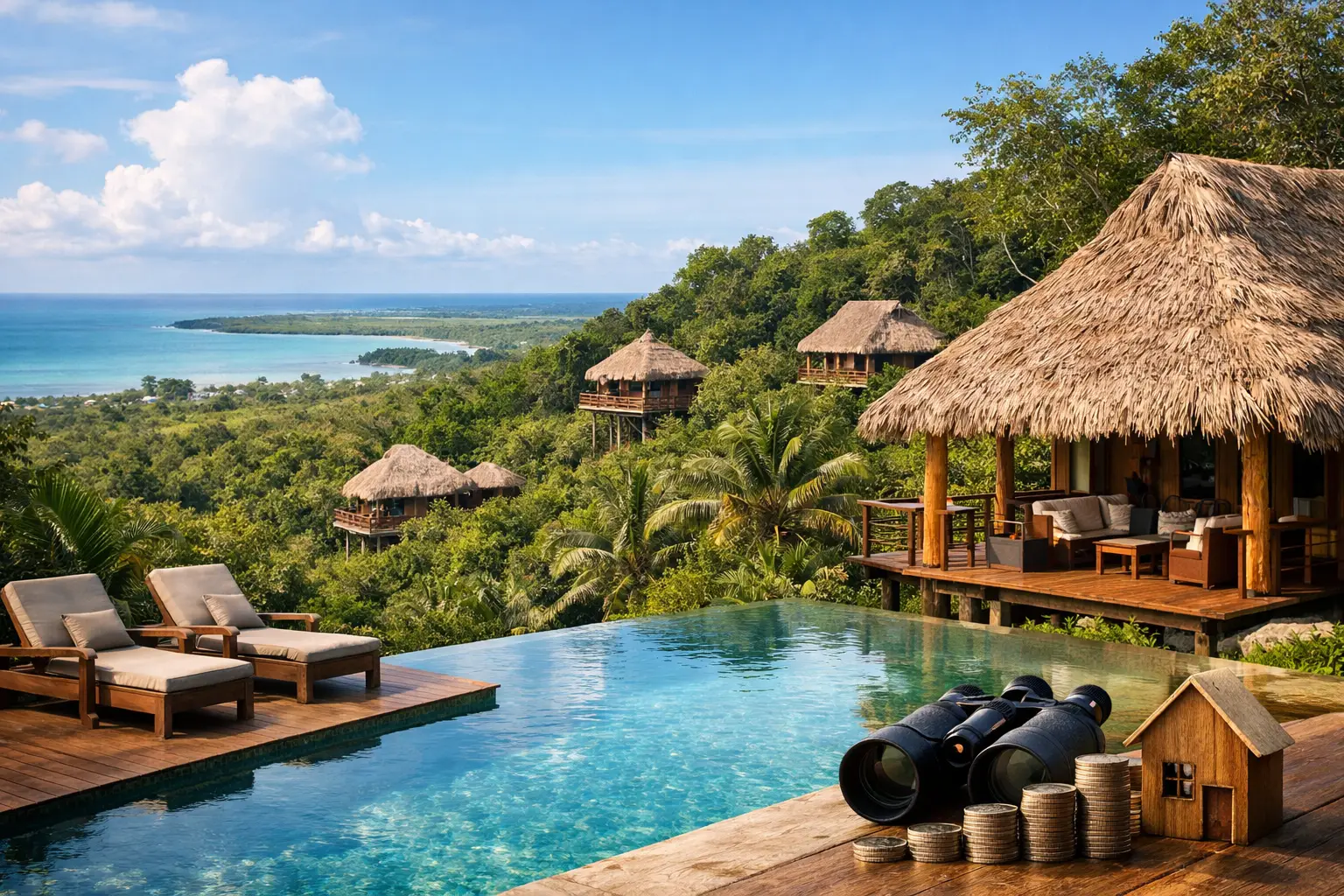
Belize is not a market where an eco lodge succeeds simply because it has solar panels, jungle views, and a compelling name. The top Belize eco lodge investments pair a distinctive natural setting with practical access, a credible operating model, and a location guests already understand. For US buyers seeking hospitality income alongside a Caribbean lifestyle asset, Belize offers rare range: reef-front cayes, rainforest preserves, river corridors, Maya Mountain foothills, and beach-to-jungle destinations within one country.
An eco lodge can be an exceptional investment, but it is not a passive beachfront condo. The property, guest experience, staffing, utilities, transportation, permits, and marketing all matter. Buyers who evaluate the full business rather than the scenery are best positioned to find an asset with durable value.
What Makes a Belize Eco Lodge Investment Stand Out?
Short answer: The strongest eco lodges sell an experience competitors cannot easily copy, such as reef snorkeling, the Cockscomb Basin area, southern birding and rivers, western caves, or a private island. Guests still expect clean rooms, reliable power, safe water, good food and organized transport, so location and operations matter equally.
The strongest lodge opportunities are built around an experience that cannot be easily duplicated. That may mean snorkeling access near the Belize Barrier Reef, proximity to the Cockscomb Basin area, birding and river adventures in the south, cave exploration in western Belize, or a private island setting with limited guest capacity. Guests pay for meaningful access to nature, but they also expect clean rooms, dependable power, safe water, good food, and organized transportation.
Location has to work on two levels. First, it must appeal to guests. Second, it must be manageable for ownership. A remote jungle lodge may command higher nightly rates and deliver a more authentic experience, yet its road access, supply runs, staffing, maintenance costs, and rainy-season logistics can reduce margins. A more accessible property near a major tourism corridor may face more competition, but it can be easier to operate and market year-round.
For investment purposes, do not confuse a beautiful parcel of land with an operating lodge. Land offers development potential. An established lodge may offer existing cabins, infrastructure, trained staff, supplier relationships, booking history, and immediate revenue. The right choice depends on whether you want to build a hospitality brand or acquire an income-producing business with systems already in place.
Top Belize Eco Lodge Investments by Market Area
Southern Belize: Placencia, Hopkins, and the Maya Mountains
Southern Belize is a leading choice for buyers who want a lodge that connects beach travelers with rainforest experiences. Placencia has strong name recognition, a developed tourism base, restaurants, services, and access to the Caribbean. Hopkins offers a more relaxed village atmosphere and a strong cultural identity, while the inland foothills and forest areas create opportunities for boutique jungle accommodations.
This region can support eco lodges with guided activities, wellness programs, wildlife experiences, fishing, diving, and multi-night itineraries. A property that can sell both coastal and inland adventure has a broader marketing story than a lodge built around one activity alone.
The trade-off is that desirable south-coast locations can be more expensive, particularly near the beach or established resort zones. Buyers should also look beyond the main road. Drainage, road quality, internet reliability, hurricane exposure, and the cost of transporting materials all affect a lodge’s capital plan.
Western Belize: San Ignacio and the Cayo District
The Cayo District is one of Belize’s most practical eco lodge markets. San Ignacio is a recognized base for visitors heading to Maya sites, caves, rivers, farms, and rainforest reserves. It also has more everyday services than many remote destinations, which can make purchasing, staffing, banking, and maintenance more manageable.
Eco lodges in Cayo often appeal to adventure travelers, families, cultural tourists, birders, and visitors combining Belize with Guatemala. A well-positioned property can build packages around cave tubing, canoeing, horseback riding, archaeological tours, chocolate experiences, and guided jungle excursions.
For buyers, Cayo can offer more flexibility than premium island or beachfront markets. There may be opportunities to acquire acreage with existing cottages, a small resort, a riverfront parcel, or a farm-based hospitality concept. Still, guest demand is not identical across every inland location. A remote parcel needs a clear reason for travelers to make the trip and stay more than one night.
Ambergris Caye and Turneffe-Style Marine Experiences
Ambergris Caye is Belize’s best-known tourism and real estate market, making it attractive for buyers who prioritize visibility, air access, and established guest demand. It is not the obvious choice for a traditional jungle eco lodge, but it can be an excellent setting for low-density, marine-focused hospitality. Think dive-oriented boutique resorts, conservation-minded beachfront cabins, or small properties that emphasize reef access and water-based excursions.
The opportunity is clear: travelers already know San Pedro, and the island has a wide range of restaurants, tour operators, transportation options, and rental demand. The challenge is pricing. Waterfront and beachfront inventory can carry a premium, and service expectations are higher in an established resort market. Operators need a clear positioning strategy rather than a generic claim of being eco-friendly.
More remote atoll and island properties can deliver a remarkable private experience, especially for diving, fly fishing, and high-end adventure travel. They also require serious due diligence around boat access, fuel, staff housing, power generation, water systems, supply chains, weather exposure, and emergency planning.
Toledo: Deep Nature and Lower-Density Opportunity
Toledo is one of Belize’s most compelling areas for buyers looking for a true nature-based hospitality play. The district is known for rainforest, rivers, cacao farms, Maya communities, wildlife, and a lower-density feel than the country’s busiest tourism hubs. It may suit an investor seeking a small, experience-led lodge rather than a large resort operation.
The upside is differentiation. A thoughtfully designed lodge in Toledo can offer privacy, cultural depth, and conservation value that is difficult to recreate in a more developed destination. The limitation is that the market requires stronger guest education and more deliberate marketing. Visitors may not arrive through name recognition alone, so the property needs exceptional photography, clear activity packages, reliable transportation arrangements, and a reason to book in advance.
Evaluate the Business Behind the Property
When reviewing Belize eco lodge listings, ask for more than room counts and photos. Request historical occupancy, average daily rate, booking channels, seasonal revenue, payroll, utility costs, food and beverage performance, tour income, maintenance records, and capital improvements. If the seller provides projections, distinguish between documented results and future potential.
An owner-operated lodge can show attractive returns partly because the owner handles reservations, guest relations, repairs, bookkeeping, or marketing. If you plan to live in the United States or visit only periodically, budget for a capable local manager and a clear reporting system. Absentee ownership can work, but it changes the expense structure.
Infrastructure deserves special attention. Confirm the condition and capacity of water storage, septic systems, solar arrays, backup generators, docks, boats, kitchens, staff quarters, access roads, and internet service. In a hospitality property, deferred maintenance is not a cosmetic issue. It can affect reviews, occupancy, safety, and the ability to operate during peak season.
Due Diligence for Eco Lodge Buyers in Belize
Foreign buyers can own real estate in Belize, but every purchase deserves professional legal and financial review. Verify title, survey boundaries, access rights, existing leases, liens, zoning or land-use restrictions, and whether the current structures match applicable approvals. If a lodge is near the coast, a river, protected area, or sensitive habitat, environmental and development considerations can be especially significant.
Also confirm what is actually included in the sale. That can include furniture, vehicles, boats, booking software, websites, trade names, staff agreements, permits, inventory, and deposits for future reservations. A turnkey listing should be evaluated item by item, not accepted as a label.
For development sites, obtain realistic construction pricing before assuming a low land purchase creates a low-cost project. Importing materials, building in remote areas, creating staff accommodations, and installing water and power systems can materially change the investment. Belize rewards thoughtful development, not rushed assumptions.
Build for Revenue Beyond the Room Rate
The best eco lodges create several reasons for guests to spend. Guided tours, transfers, meals, wellness services, equipment rentals, private excursions, and multi-day packages can lift per-guest revenue while making the stay easier to book. That does not mean every lodge needs a large restaurant or a fleet of boats. It means the guest experience should fit the location and support a profitable stay.
A six-cabin jungle lodge may perform best with all-inclusive adventure packages and intimate service. A larger coastal property may benefit from a restaurant, dive partnerships, and flexible room-only options. The model depends on access, guest profile, staffing availability, and how much operational complexity you want to manage.
Belize Real Estate MLS helps buyers compare hospitality properties, resort opportunities, acreage, beachfront assets, and income-producing real estate in the markets that fit their goals. Start with the guest experience you want to sell, then choose the property that can deliver it consistently – season after season.
Quick answers for buyers
Do vacation rentals in Belize need a licence?
Yes. Short-term rental accommodation must be registered and licensed with the Belize Tourism Board before it is advertised, and a 9% hotel (accommodation) tax applies to room revenue. Budget as well for income tax and any GST registration your rental business triggers, and confirm current rules with the BTB before buying for income. Source: Belize short-term rental permits guide.
Can foreigners own property in Belize?
Yes. Foreigners can buy and hold freehold property in Belize with the same ownership rights as Belizean citizens; the old Aliens Landholding Act was abolished in 2001. You do not need residency or a local partner, but you should have a Belize attorney search the title at the Lands Registry before any money changes hands. Source: Belize real estate attorneys Wrobel & Co..
Related reading: resorts for sale in Belize, Cayo District property and Toledo listings.
About the Author – Grant Kenneth
California until 2011. San Pedro after that. Businesses, real estate, mortgages behind me. Websites and SEO in front of me. Wife in 2014. Son a year later. Her daughter already here. Fifty brokerages, no MLS, so I built one. Partner retired. I rebuilt the site and became the agent.
