
Short answer: To buy Belize land safely, hire your own Belize attorney before paying a deposit. Have them search the parcel at the Land Registry for the owner, charges and cautions, then confirm the survey, legal access and the permits your plan needs. Foreigners need no landholding licence, but foreign buyers pay 8% stamp duty.
Updated October 21, 2026. All prices in US dollars (BZ$2 = US$1).
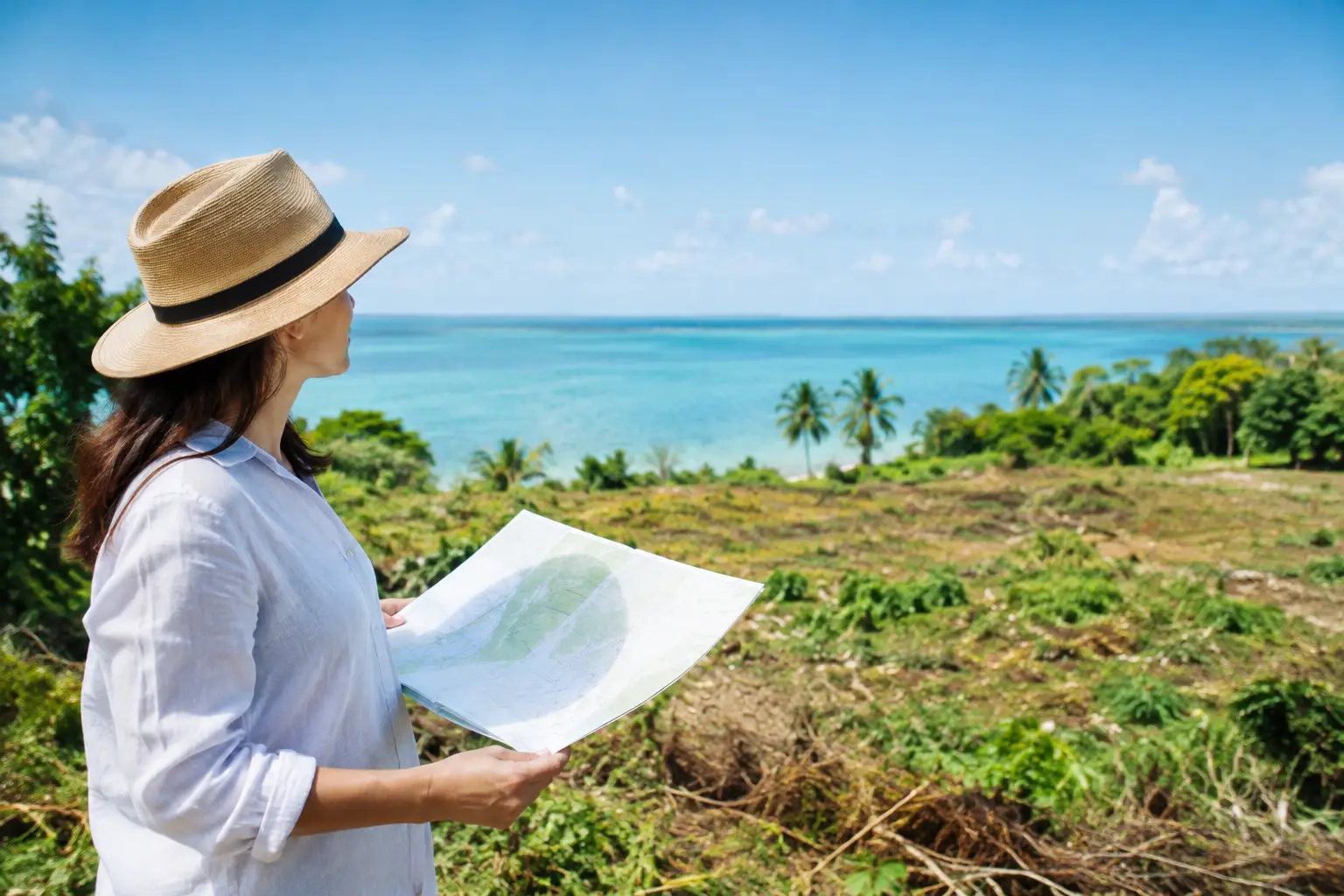
A low price on acreage near the coast, a jungle parcel with river frontage, or a buildable lot outside a growing village can look like the Belize opportunity you have been waiting for. But land is not a condo with a defined building, association documents, and obvious boundaries. Buying Belize land safely means confirming exactly what is being sold, who has the legal right to sell it, and whether the parcel supports the life or investment plan you have in mind.
Belize welcomes international buyers (see our Belize ownership rules), and land can be a good way to secure a future home site, agricultural holding, development opportunity, or long-term asset in a destination market. The right purchase begins with disciplined due diligence, not pressure to send a deposit before the facts are clear.
How Do You Check a Belize Land Parcel and Its Title?
The listing description is a starting point, not proof. Before you negotiate seriously, identify the parcel by its official details: the lot, block, parcel, or deed reference; acreage or square footage; district; and applicable survey plan. Ask which of Belize’s three freehold title types the seller holds: a Land Certificate under the Registered Land Act (Chapter 194), a Transfer Certificate of Title, or a Deed of Conveyance, as listed by the US State Department. The records to examine differ for each; our Land Certificate vs deed guide explains how.
A licensed Belize attorney should conduct a formal title search at the Land Registry of the Ministry of Natural Resources in Belmopan. The search should confirm the current owner, identify mortgages (called charges on registered land), liens, cautions, easements, restrictions, and any registered interests that could affect your use or transfer of the property. Do not rely solely on a copy of a title document supplied by a seller or representative. A document may be genuine and still fail to tell the full current story. Our step-by-step guides show how to check a property title in Belize and which documents to verify.
Land boundaries deserve the same scrutiny. Arrange for a qualified surveyor to review an existing survey and, when circumstances call for it, mark or verify the boundaries on site. Fences, trees, roads, and informal markers do not always match the legal survey. This matters especially for large tracts, waterfront parcels, and lots in areas where neighboring development has changed the landscape. On the coast, a public reserve of up to 66 feet from the high-water mark can remain national land, so confirm where your title actually starts (see our beachfront and waterfront guide).
How Do You Confirm Access, Utilities, and Usable Land?
A beautiful parcel is less valuable if you cannot legally and practically reach it. Confirm whether access comes from a public road, a recorded right-of-way, or a private route. If access crosses another property, your attorney should verify that the right is legally documented and usable for the purpose you intend.
Then look beyond the map. Visit the site in dry and wet conditions if possible. A road that appears passable in a listing photo may be difficult during the rainy season. Coastal and low-lying parcels may require fill, drainage work, elevated construction, or specialized engineering. Inland acreage may have terrain, soil, or water considerations that change the real cost of building or farming.
Utilities are equally location-specific. Ask direct questions about electricity, water source, internet availability, waste management, road maintenance, and the distance to the nearest established service connection. If your plan includes a home, guest accommodations, agriculture, or a commercial project, confirm what infrastructure will be required and obtain realistic local estimates before you price the land as a bargain.
What Approvals Do You Need to Subdivide or Build?
Not all land is the same kind of opportunity. Freehold land, leasehold interests, land with use restrictions, waterfront parcels, agricultural acreage, and property within a planned subdivision can each carry different obligations. Foreign and non-resident buyers can acquire privately titled land but not national leased land, according to the US State Department, so a lease of national land is not something a foreign buyer can take over. Your attorney and relevant local professionals should help you establish whether the tenure and permitted uses fit your intended ownership strategy.
If you plan to build, ask what approvals may be needed before construction begins. Subdivision applications go through the Ministry of Natural Resources’ Physical Planning Section to the Land Subdivision and Utilization Authority. Building plans need review by the Central Building Authority, which asks for no-objections such as local zoning permission, Department of Environment clearance and sewage approval. Certain projects also need an Environmental Impact Assessment approved by the Department of the Environment. Coastal or shoreline rules and protected areas can add further conditions. Do not assume that an attractive neighboring home proves you can build the same thing on the parcel you are considering.
This is also where buyer expectations need to be practical. A remote jungle parcel may offer privacy and room to grow, but it can require greater investment in access, utilities, security, and construction logistics. A smaller lot near Placencia, Caye Caulker, Ambergris Caye, or a growing inland community such as Belmopan or Cayo may offer stronger convenience and market visibility, but at a higher entry price and with more development around it. The best choice depends on whether lifestyle access, future construction, agricultural use, or long-term appreciation is your priority.
How Should the Contract and Closing Protect You?
A local attorney working for you is one of the most valuable safeguards in a Belize land purchase. The attorney should not simply prepare paperwork at the end. Bring legal counsel in before you sign a binding agreement, pay a substantial deposit, or make a commitment based on verbal assurances.
Your purchase agreement should clearly identify the property, purchase price, deposit terms, due diligence period, closing conditions, responsibility for taxes and fees, and what happens if title or other agreed conditions cannot be satisfied. If the sale depends on survey confirmation, subdivision approval, access verification, or financing, those conditions should be written into the contract.
Non-Belizeans can buy privately titled land in their own name or through a company, with no residency requirement, according to the US State Department Investment Climate Statement. No Alien Landholding Licence is needed: the Aliens Landholding Act was repealed in 2001. What does apply is Central Bank of Belize exchange control: non-residents must register the investment, or give the Central Bank prior notice of the purchase, which is what later lets you repatriate sale proceeds. Our guide to legal requirements for foreigners buying land covers the details, and your attorney should still confirm how they apply to your parcel.
Funds should move only according to documented instructions that you have independently verified. Understand where your deposit will be held, who can release it, and what written conditions govern release. Be cautious about last-minute banking instruction changes or requests to send money to an unrelated third party. A professional closing process should create a clear paper trail from contract to registration and final transfer.
What Does Buying Land in Belize Cost Beyond the Price?
The purchase price is only one number in your Belize land budget. Build a reserve for legal work, title searches, surveys, stamp duty, registration, government fees, currency conversion, and site-specific work. Under the Stamp Duties Act (Chapter 64), the first US$10,000 of value is exempt; above that, Belizean citizens, Belizean companies and qualifying CARICOM nationals pay 5% and other buyers pay 8%, on the price or the land’s value, whichever is greater. On a US$190,000 parcel, a foreign buyer’s stamp duty is about US$14,400. Our closing costs guide and closing cost calculator cover the rest, and after closing, rural land pays annual land tax. Depending on the property, the major cost may not be closing at all. It may be a road, fill, drainage, utility extension, well, septic system, dock, retaining work, or engineering.
For investment-minded buyers, it is wise to model two scenarios: the best-case plan and the slower, more expensive plan. How does the purchase look if approvals take longer than expected? What if construction costs rise? What if the parcel remains a long-term hold rather than an immediate build site? Land can be a compelling diversification play, but it is usually less liquid than a finished home in an established destination area.
What Red Flags Should Make You Pause?
Some issues do not automatically end a deal, but they should slow it down until they are resolved. Be especially cautious when you encounter:
- A seller who resists an independent title search, survey review, or attorney involvement.
- Unclear boundaries, missing survey references, or a property description that changes between conversations.
- Access that appears to rely on a neighbor’s informal permission rather than a recorded right-of-way.
- People living on or farming the land without the owner’s documented permission. Squatters can claim title through the High Court after 12 years of uninterrupted possession of registered land or 30 years of national land, per the US State Department.
- A promise that a national land lease “will be converted” to title, or a Land Certificate whose plan and parcel numbers do not match the survey.
- Pressure to send funds quickly because another buyer is supposedly waiting.
- Claims about building rights, beach access, utilities, or future development that are not supported by records or local verification.
The strongest land opportunities stand up to questions. A motivated, legitimate seller should be able to provide documents, allow reasonable due diligence, and work within a professional closing timeline.
How Do You Compare Land Across the Belize Market?
Land buyers often focus narrowly on one promising parcel and lose sight of comparable opportunities. Before committing, compare location, access, price per acre or lot, title type, infrastructure, and realistic future use against other available properties. Belize Real Estate MLS makes that process easier by bringing land, homes, condos, farms, waterfront opportunities, and investment properties into one place for a broader market view. Our guide to buying land in Belize and cheap land for sale roundup show typical prices.
Example land listings to compare (asking prices checked October 21, 2026):
| Listing | Area | Asking price |
|---|---|---|
| 70 acres with river frontage | Stann Creek District | US$350,000 |
| 9-acre jungle parcel, Sittee River | Stann Creek | US$250,000 |
| 20.25 acres, Coastal Road frontage | Belize District | US$190,000 |
| 5 acres, Burrell Boom | Belize District | US$50,000 |
| 100 x 100 ft residential lot | Belmopan | US$145,000 |
A comparison may reveal that a slightly higher-priced lot has better road access and utilities, or that a larger inland tract offers more flexibility for the same overall budget. It can also confirm that the parcel you found is genuinely well positioned. Either outcome gives you negotiating confidence.
The safest land purchase is not the one that closes fastest. It is the one you can describe clearly years from now: a parcel with verified ownership, known boundaries, legal access, realistic costs, and a purpose that still makes sense after the excitement of the first viewing has passed. When you find a parcel, contact us and we can help you line up the checks above.
Frequently Asked Questions
Can foreigners buy land in Belize?
Yes. Foreigners can buy privately titled land in their own name, jointly or through a company, with no residency requirement, according to the US State Department. No landholding licence is needed since the Aliens Landholding Act was repealed in 2001. Foreign buyers cannot acquire national leased land and must register the investment with the Central Bank of Belize.
What is the difference between a Land Certificate and a deed in Belize?
A Land Certificate is issued for land on the register under the Registered Land Act (Chapter 194), where one register shows the owner, charges and cautions. A Deed of Conveyance is older deed-system title, so every transfer in the chain must be traced. A Transfer Certificate of Title is the third type. Our titles guide compares them.
How much stamp duty do foreigners pay on Belize land?
Under the Stamp Duties Act (Chapter 64), the first US$10,000 of value is exempt and foreign buyers pay 8% on the rest; Belizean citizens, Belizean companies and qualifying CARICOM nationals pay 5%. Duty is charged on the price or the land’s value, whichever is greater. On a US$190,000 parcel, a foreign buyer pays about US$14,400.
Do I need approval to subdivide or build on land in Belize?
Yes. Subdivision applications go through the Ministry of Natural Resources’ Physical Planning Section to the Land Subdivision and Utilization Authority. Building plans are reviewed by the Central Building Authority, which asks for zoning permission, Department of Environment clearance and sewage approval, and some projects need an Environmental Impact Assessment.
Can squatters claim land in Belize?
Yes, in limited cases. According to the US State Department, squatters’ rights are enforceable only by High Court order after at least 12 years of uninterrupted possession of registered land, or 30 years of national land. Visit the parcel, ask who is using it, and have your attorney address any occupants before you close.
